The Production Bottleneck: Measuring the Depth of U.S. Industrial Endurance
Washington, D.C. — For the U.S. military, the most pressing constraint on readiness is shi...
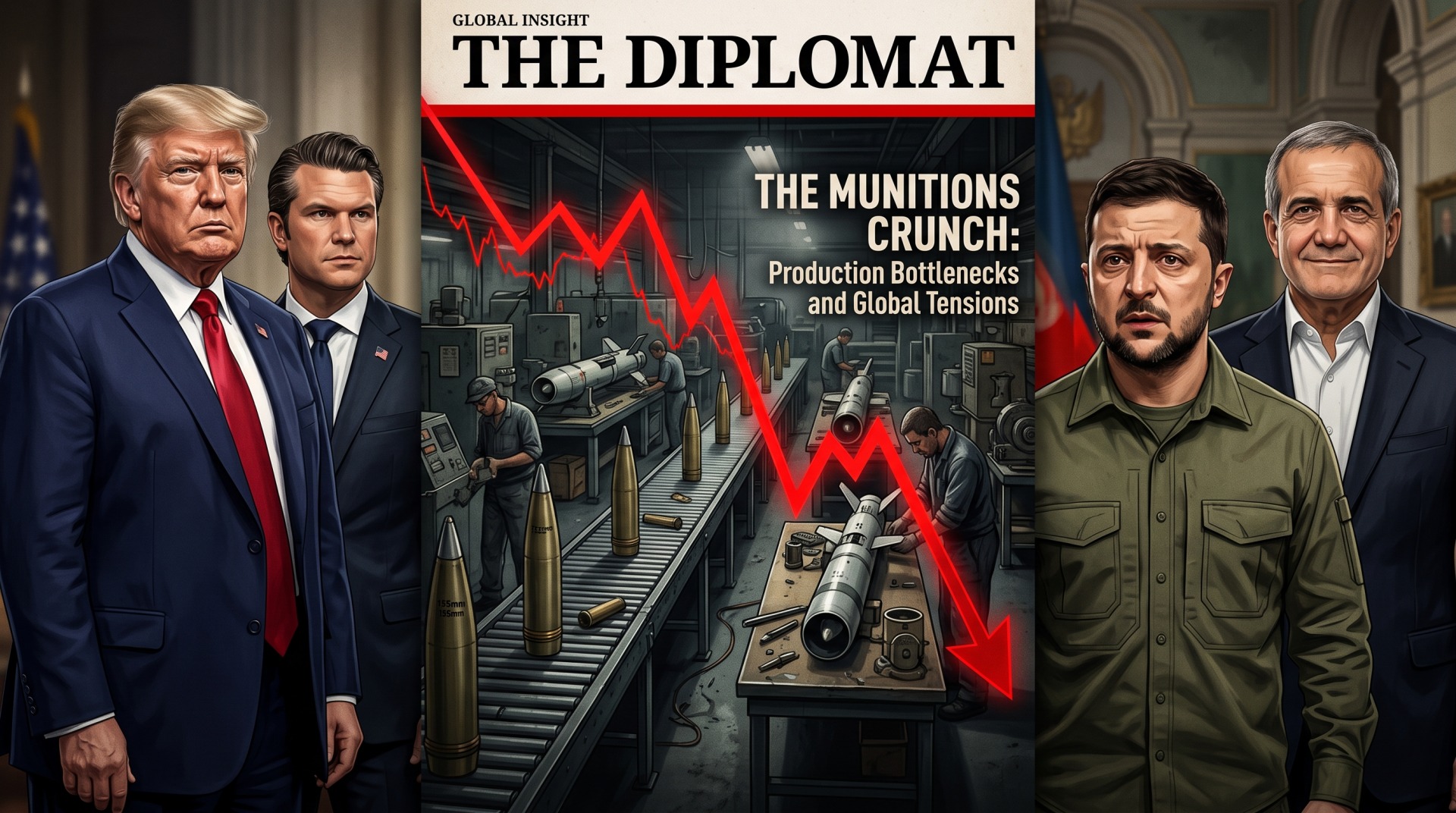
Washington, D.C. — For the U.S. military, the most pressing constraint on readiness is shifting from budget battles to the physical limits of the assembly line. While defense spending remains at record levels, the industrial base’s ability to replenish advanced munitions is struggling to match the high rates of consumption seen in active theaters. This gap suggests that military endurance is increasingly dictated by the depth of the production system rather than just the size of the force.
Inventory Pressure and the 21-Day Directive
Evidence of inventory pressure surfaced following the intensive use of long-range precision-guided systems. According to Reuters, U.S. stocks of the Army Tactical Missile System (ATACMS) and the Precision Strike Missile (PrSM) were nearly exhausted during the Iran conflict.In response, the Pentagon has moved to aggressively press contractors for accelerated production. As reported by the Associated Press, the Department of Defense issued a directive giving defense firms just 21 days to submit concrete plans to increase output. The Washington Post characterized the push as a direct reaction to the rate at which the war with Iran is depleting existing stockpiles.
The Complexity of Scaling Production
Closing this gap remains a long-term industrial project. On August 17, 2026, the Navy awarded Raytheon a $22.9 billion contract to expand Tomahawk production from roughly 60 units annually to over 1,000. Yet, in an analysis titled "The U.S. Munitions Crisis," the Council on Foreign Relations points out that America's reliance on highly sophisticated weapons creates an inherent vulnerability: these systems cannot be mass-produced with the speed required during sudden spikes in combat intensity.This replenishment challenge extends to air-defense interceptors. Reuters reported. that the U.S. is boosting Patriot and THAAD production to satisfy demand across both the Middle East and Ukraine. At the same time, an August 10 report from the Institute for the Study of War (ISW) noted that Russia has increased its own ballistic missile production. While this primarily impacts the tactical landscape in Ukraine, the expansion of adversary strike capacity potentially increases the long-term demand for a finite Western supply of interceptors.
A Test of Industrial Footing
There are also indications of tactical crossover between theaters. ISW reports that Iranian forces have reportedly incorporated drone tactics learned from the Russia-Ukraine war, further complicating the defensive requirements for U.S. forces.Ultimately, the central strategic uncertainty is whether the U.S. defense industrial base can reach what the Center for Strategic and International Studies (CSIS) calls an effective "wartime footing." Current production timelines suggest that while technological superiority remains a U.S. hallmark, the endurance of that advantage is being tested by the realities of sustained, multi-theater demand.