Riyadh Airport Closure Extends as Airlines Suspend Flights After Attacks
Saudi authorities extended Riyadh airport's closure after deadly October 10–11 attacks. Airlines suspended flights, and Delta delayed its Atlanta–Riyadh launch. An October 17 aviation notice does not guarantee reopening.
Sources & references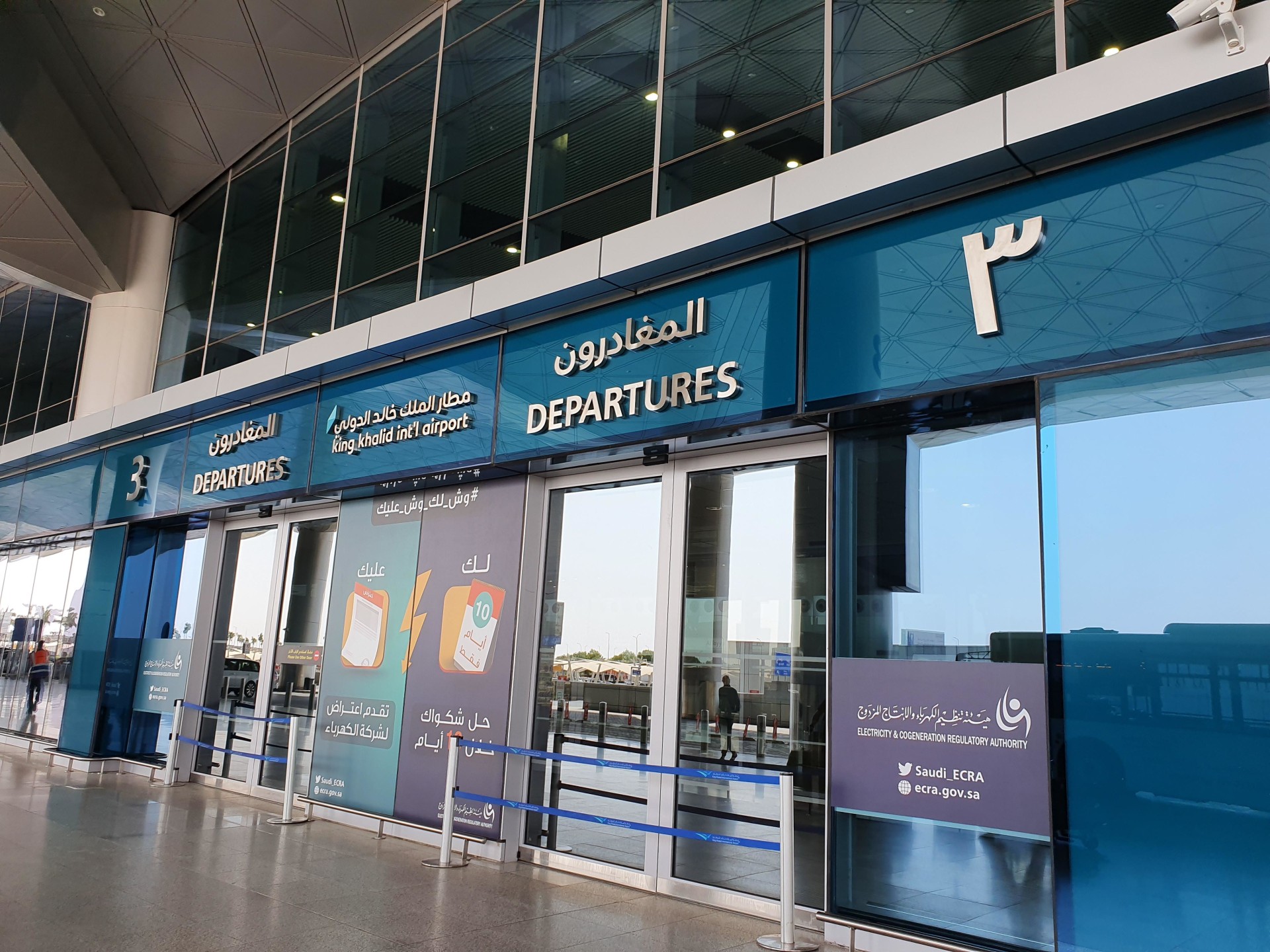

Saudi aviation authorities extended the shutdown of King Khalid International Airport on October 12 after deadly attacks over the weekend, leaving Riyadh's principal international airport unable to resume regular operations. The interruption is reaching beyond damaged facilities: airlines have suspended flights, while aviation regulators are warning operators about risks across Saudi airspace.
The human toll came first. Saudi Arabia's General Authority of Civil Aviation initially reported 12 people killed, including a U.S. citizen, and 309 injured in the October 10 attack. Subsequent reporting raised the fatality count from that incident to at least 13. Those figures describe Saturday's attack, not the separate strike that followed the next day.
On October 11, the Saudi-led coalition said an unidentified projectile struck Terminal 4 and started a fire. In an updated account reported by Saudi Gazette, Saudi aviation authorities identified the person killed as a Pakistani resident and reported 11 additional injuries. That nationality is an official identification reported by news outlets, not an independently established identity in the available record.
Houthi military spokesperson Yahya Saree claimed responsibility for Saturday's strike. The group also claimed attacks on Dammam airport and Saudi Aramco facilities. Saudi aviation authorities separately acknowledged an attack at Dammam; the specific Aramco facility impacts were not independently confirmed in the cited reporting.
A Closure With No Guaranteed Reopening
The October 12 decision kept airport operations suspended while authorities checked facility safety and readiness. A published aviation notice specified a closure through 21:00 UTC on October 17. That is the current notice endpoint, not a commitment that commercial flights will restart at that hour.
The threat environment was still active when the extension was announced. On Monday, the Saudi-led coalition reported new incoming drones and missiles. Reuters said a complete account of their interception outcomes was not immediately available. Announcing incoming weapons is not the same as confirming additional damage, and neither establishes how long the airport will remain unusable.
This creates two separate operating problems. Authorities must determine whether the airport itself is safe to reopen. Airlines also must judge whether a route can be operated reliably amid continued threat alerts and possible short-notice restrictions. The second problem can persist even without another projectile striking a terminal.
Airlines Reconsider Access to Riyadh
The European Union Aviation Safety Agency revised its Saudi airspace bulletin on October 9, before the weekend's two deadly incidents. It described risks not only from missiles and drones but also from air-defense operations, interception activity and debris. Its guidance recommends that operators not fly in specified portions of Saudi airspace and exercise caution elsewhere. It also calls for contingency planning; the recommendation is not a blanket closure order for Saudi airspace.
The U.S. Federal Aviation Administration also advised American operators to use caution on flights to or over Saudi Arabia. The advisories are not declarations that every Saudi airport is closed; they concern the conditions under which aircraft can operate safely.
The schedule effects are already measurable in carrier decisions. Reuters documented suspensions by European and regional airlines. Lufthansa Group canceled Riyadh flights through October 16, while Air France-KLM extended its suspension through the end of October. Delta postponed its planned Atlanta–Riyadh service until March 2027, rather than launching the route in October as originally planned, Reuters reported.
The postponement suggests how uncertainty over operational continuity can affect future service, not only flights already scheduled to depart. Whether these decisions translate into prolonged economic losses cannot be established from the current record. They do, however, demonstrate a commercial consequence separate from the immediate terminal damage.
Disruption Is Serious but Not Nationwide
The interruption is uneven. Reuters found that aircraft continued using other Saudi airspace and landing in Jeddah while flights avoided Riyadh. EASA also acknowledged Saudi Arabia's established airspace-management capabilities, including contingency measures. Neither fact erases the shutdown in the capital, but both weigh against describing the entire national aviation network as paralyzed.
Saudi coalition officials also reported intercepting a cruise missile near King Khalid International Airport. That claim reflects the authorities' account of a defensive action, not independent verification of every interception or a complete explanation for the strikes that reached airport facilities.
Key limits remain: the October 11 projectile's precise type and independently established chain of responsibility are unresolved; the full outcome of Monday's reported incoming threats is unclear; and the claimed impacts at Aramco facilities remain unconfirmed. The next operational test is sustained reopening, not merely the expiration of a notice. As of October 12, there was no verified commitment that Riyadh airport would resume normal service on October 17.
What we know
- Saudi aviation authorities initially reported 12 deaths, including a U.S. citizen, and 309 injuries from the October 10 Riyadh airport attack. [1]
- The reported death toll from the October 10 attack subsequently rose to at least 13. [2]
- The Saudi-led coalition said an unidentified projectile struck Terminal 4 on October 11, causing a fire. [2]
- According to Saudi Gazette, Saudi aviation authorities reported that a Pakistani resident was killed and 11 people were injured in the October 11 strike. [3]
- The Saudi-led coalition announced renewed incoming drone and missile threats on October 12. [4]
- Saudi authorities extended the Riyadh airport suspension on October 12 pending facility safety and readiness checks. [5]
- An aviation notice examined by Reuters specified a closure endpoint of 21:00 UTC on October 17, not a guaranteed reopening. [5]
- EASA revised its Saudi airspace risk bulletin on October 9, 2026. [6]
- Reuters reported an FAA caution notice for U.S. aviation operators flying to or over Saudi Arabia. [5]
- Delta postponed its planned Atlanta–Riyadh route launch until March 2027. [5]
- Reuters reported that flights continued in other Saudi airspace, including landings at Jeddah, while Riyadh remained closed. [5]
- Saudi coalition authorities said they intercepted a cruise missile near Riyadh airport. [2]
What remains unclear
- Independent documentation establishing the October 11 deceased's nationality beyond Saudi authorities' reported identification was not established.
- The precise weapon type and independently established chain of responsibility for the October 11 Terminal 4 impact remain unresolved.
- The full outcomes of the incoming drones and missiles reported on October 12 are not established.
- The claimed effects of Houthi attacks on specified Saudi Aramco facilities remain unconfirmed.
- The date of sustained restoration of normal Riyadh airport operations is unknown; the October 17 notice is not a guaranteed reopening.
Sources & references
- 12 killed, 309 injured in attack on Riyadh airport, GACA confirms
Independent Reporting · Saudi Gazette · 2026-10-11
Context & limitations
Reports GACA's initial figures, including the U.S. nationality, rather than independently verifying each casualty; Saturday's death toll was later updated.
- One dead in new attack on Saudi airport, a day after Houthi strike kills 13
Independent Reporting · Reuters · 2026-10-11
Context & limitations
Terminal projectile and interceptions are Saudi coalition accounts; Houthi responsibility, Dammam and Aramco targeting statements require attribution. Specific Aramco damage unconfirmed.
- Pakistani resident killed, 11 injured in Sunday’s attack on Riyadh airport
Independent Reporting · Saudi Gazette · 2026-10-12
Context & limitations
Publishes GACA's reported nationality and casualty count; does not independently establish the victim's identity.
- Saudi Arabia faces new missile and drone fire after major attacks on airports
Independent Reporting · Reuters · 2026-10-12
Context & limitations
Relays Saudi-led coalition reports of incoming threats; full outcomes were not established at its reporting cutoff.
- Saudi capital's airport to remain shut this week as airlines cancel services
Independent Reporting · Reuters · 2026-10-12
Context & limitations
Reports closure, NOTAM endpoint and airline plans at reporting time; the October 17 expiry is not a guaranteed reopening date; some other Saudi flights continued.
- Airspace of Saudi Arabia
Primary Record · European Union Aviation Safety Agency · 2026-09-30
Context & limitations
EASA Conflict Zone Information Bulletin CZIB-2026-09-R1 revised 2026-10-09; describes flight safety exposures and safeguards, not the duration or certainty of future disruption.