Iran Threatens Gulf Undersea Cables as Reuters Reports Unverified Attack Plans
Iranian officials threatened possible attacks on Gulf undersea cables if war resumes. Reuters cited two anonymous Iranian security officials alleging detailed plans, which remain unverified; the main connectivity risk is regional.
Sources & references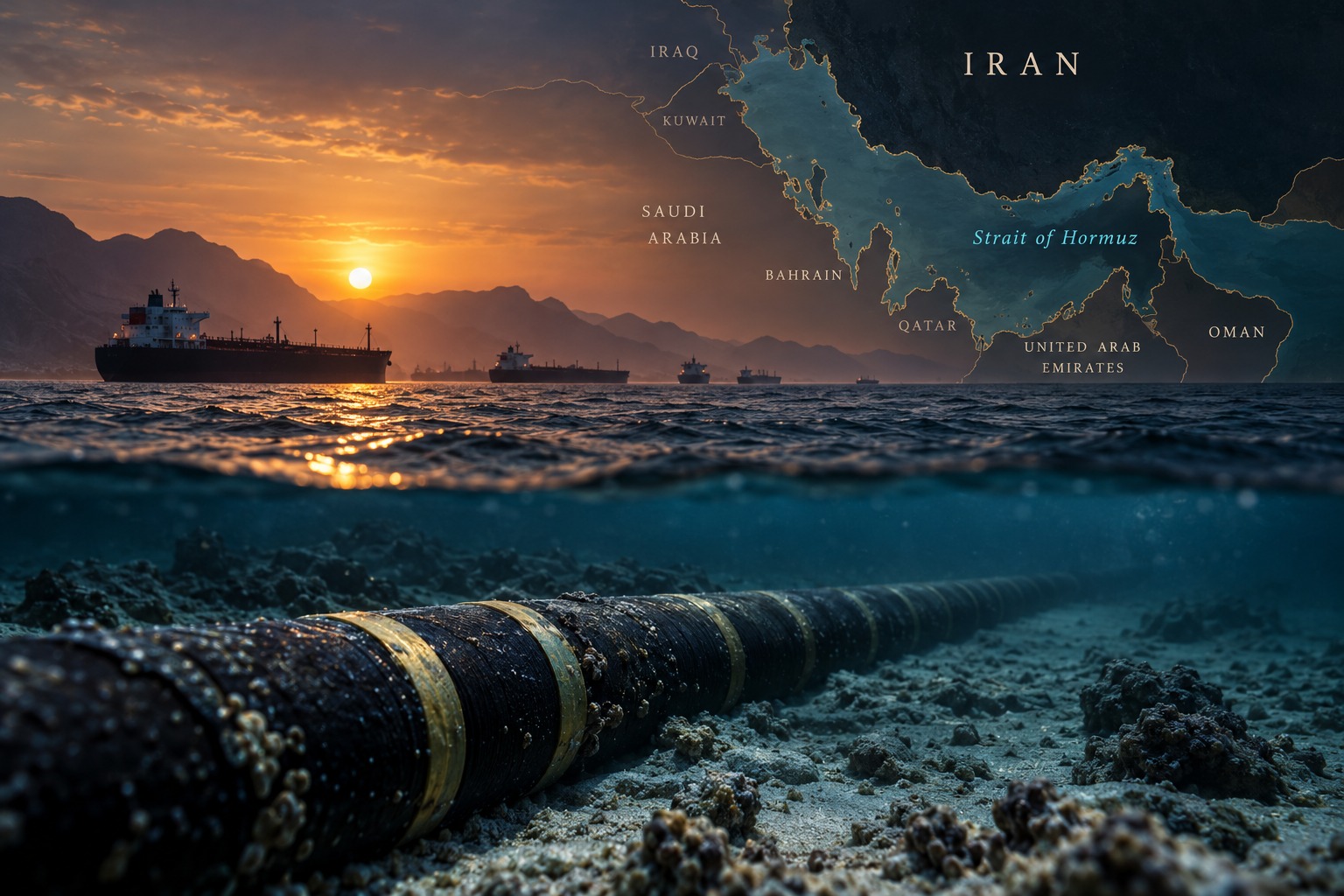
Iranian officials have threatened possible attacks on undersea communications cables and other digital infrastructure if fighting with the United States and Israel resumes. Those public warnings about Gulf cables were followed by Reuters' report of alleged detailed attack plans from two anonymous Iranian security officials. The warnings are documented; the purported plans remain unverified.
In a written interview published October 21, Iranian security chief Mohsen Rezaei said cables, data centers and artificial intelligence facilities could become targets in a renewed war. His remarks broadened the stated scope of retaliation to the infrastructure on which regional digital services depend. They were conditional threats, not announcements that attacks had begun.
The same day, Yadollah Javani, a senior Islamic Revolutionary Guard Corps official, warned that undersea cables in the Strait of Hormuz could be targeted if Iranian infrastructure were attacked. His remarks were carried by Iran's Tasnim News Agency, an interested-party outlet reporting his position. The Guardian reported the wider conditional warnings the next day, including threats involving energy and technology facilities across the Gulf.
The Gap Between Threat and Operational Plan
On October 23, Reuters reported that two senior Iranian security officials said Tehran had detailed plans to attack undersea communications cables if the United States and Israel renewed strikes. One of the anonymous officials also said Iran would seek to obstruct repairs after an attack, potentially extending an interruption.
The existence and readiness of detailed attack plans have not been independently established. Reuters said the officials gave few operational specifics and did not explain how or where attacks would occur. The reported assertions therefore cannot establish authorization, capability or imminent action. The U.S. State Department and Iranian Foreign Ministry did not respond to Reuters' requests for comment on the officials' remarks.
The distinction matters because a threat can pressure governments and companies without a cable being damaged. Iranian officials have publicly raised the possibility of targeting communications infrastructure. Whether the plans described to Reuters have been approved or translated into orders is still unknown. So is whether any network operator has received a corroborated threat or detected related physical interference.
A Regional Exposure, Not a Global Shutdown
The International Cable Protection Committee's May 20 assessment said less than 1% of worldwide international bandwidth traverses the Strait of Hormuz. It described the strait as important to Gulf connectivity but cautioned against portraying it as a single point of failure for the global internet. A worldwide internet shutdown from a Hormuz-only cable incident is unlikely on that evidence.
Regional exposure is different. In TeleGeography's connectivity assessment, research director Alan Mauldin described alternative terrestrial and submarine routes serving Gulf countries. Those routes provide redundancy, not unlimited spare capacity. Available alternatives might not carry all the traffic diverted by simultaneous subsea disruptions; the effect would vary among networks and countries.
Analysts cited by Reuters said multiple cable failures could slow connectivity and disrupt financial transactions, e-commerce and cloud computing. The severity of such disruption would depend on the damage and on how operators rerouted traffic. Those are conditional consequences, not evidence that a major cable outage has occurred or a prediction that one is inevitable.
Repair Access Could Determine the Duration
TeleGeography's analysis of cable repairs explains why restoring a damaged connection could be difficult during hostilities: repair vessels require access and permission to work, and crews must remain in place while repairs are underway. Reuters also reported analysts' concerns about wartime access, permitting delays and insurance costs. Repair delays could compound a regional outage, but no specific duration can be established in advance.
There is also a counterweight to the immediate escalation narrative. In a White House statement reported October 21, Principal Deputy Press Secretary Anna Kelly said the United States would not attack Iran before the November 3 midterm elections. That denial is an official position, not a guarantee of future military decisions.
For Gulf network operators and technology businesses, the unresolved test is concrete: whether renewed hostilities occur, whether any cables are actually damaged, and how much alternative capacity can carry diverted traffic. Even if damage occurs, the length of disruption would depend on access for repairs. The documented development remains a widening set of public threats; the operational claims behind them are still uncorroborated.
What we know
- Drop Site News published a written interview on October 21 in which Iranian security chief Mohsen Rezaei said cables, data centers and AI facilities could become targets if war resumed. [1]
- Tasnim News Agency reported on October 21 that IRGC official Yadollah Javani warned undersea cables in the Strait of Hormuz could be targeted if Iranian infrastructure were attacked. [2]
- On October 22, The Guardian reported wider conditional Iranian threats involving Gulf energy and technology facilities. [3]
- Reuters reported on October 23 that two unnamed Iranian security officials claimed detailed plans existed for attacking Gulf undersea cables if U.S. and Israeli strikes resumed. [4]
- TeleGeography describes alternative terrestrial and submarine connectivity for Gulf networks, with limits on the capacity available for rerouted traffic. [5]
- The International Cable Protection Committee stated on May 20 that less than 1% of worldwide international bandwidth traverses the Strait of Hormuz. [6]
- White House spokesperson Anna Kelly told Drop Site News the United States would not attack Iran before the November 3 midterm elections, as reported on October 21. [1]
What remains unclear
- Whether the alleged detailed plans reported by Reuters have been formally approved or translated into operational orders.
- Whether any individual network operator has received a corroborated threat or detected threat-related physical interference.
- How much spare terrestrial and submarine bandwidth individual Gulf networks could use during simultaneous outages.
- Whether future hostilities would prevent repair access, and how long any resulting disruption might last.
Sources & references
- The War Tehran Believes Is Coming
Independent Reporting · Drop Site News · 2026-10-21
Context & limitations
Contains Rezaei's translated written interview and a White House spokesperson's denial. Establishes the statements, not operational implementation or future U.S. decisions.
- Undersea Internet Cables in Strait of Hormuz Could Be Targeted If Iran Is Attacked: IRGC Commander
Official Statement · Tasnim News Agency · 2026-10-21
Context & limitations
Interested-party outlet relaying Javani's statement to Al-Alam television; source documents the conditional warning, not technical capability, intent or independent corroboration.
- Iran threatens to strike oil and AI facilities across Gulf if US and Israel renew attacks
Independent Reporting · The Guardian · 2026-10-22
Context & limitations
Reports conditional threats and public statements; not evidence of an executed attack or an approved operational order.
- Iran has detailed plans to hit Gulf undersea cables if war resumes, officials say
Independent Reporting · Reuters · 2026-10-23
Context & limitations
Alleged attack plans rest on two unnamed Iranian security officials with few disclosed operational details and no independent authentication; impact assessments are conditional.
- Navigating Hostile Waters: Submarine Cable Infrastructure and the Strait of Hormuz
Expert Analysis · TeleGeography · 2026-03-13
Context & limitations
Earlier technical assessment; discusses network alternatives and possible repair constraints, not real-time spare capacity or any October attack.
- Regional Importance of the Strait of Hormuz
Official Statement · International Cable Protection Committee · 2026-05-20
Context & limitations
May 20 statement appears within the ICPC's News page, which also contains other releases. Less-than-1% global-bandwidth estimate cites TeleGeography; regional resilience does not establish individual operator capacity.